What Makes a Franchise
Recession-Resistant?
Lil’ Kickers has been named one of Franchise Business Review’s Top Recession-Resistant Franchises for 2026.
We’re proud of the recognition, but the more useful story is what prospective franchise owners can learn from it. What helps a business remain relevant when families become more selective about where they spend?
It’s not usually just one thing that makes a business tough during a recession. What really helps is a mix of great customer service, keeping customers coming back, keeping costs down, doing a great job in your local area, and having systems in place to help owners adjust.
Lil’ Kickers has been named one of Franchise Business Review’s Top Recession-Resistant Franchises for 2026.
We’re proud of the recognition, but the more useful story is what prospective franchise owners can learn from it. What helps a business remain relevant when families become more selective about where they spend?
It’s not usually just one thing that makes a business tough during a recession. What really helps is a mix of great customer service, keeping customers coming back, keeping costs down, doing a great job in your local area, and having systems in place to help owners adjust.
What Does the Franchise Business Review Recognition Mean?
What Does the Franchise Business Review Recognition Mean?
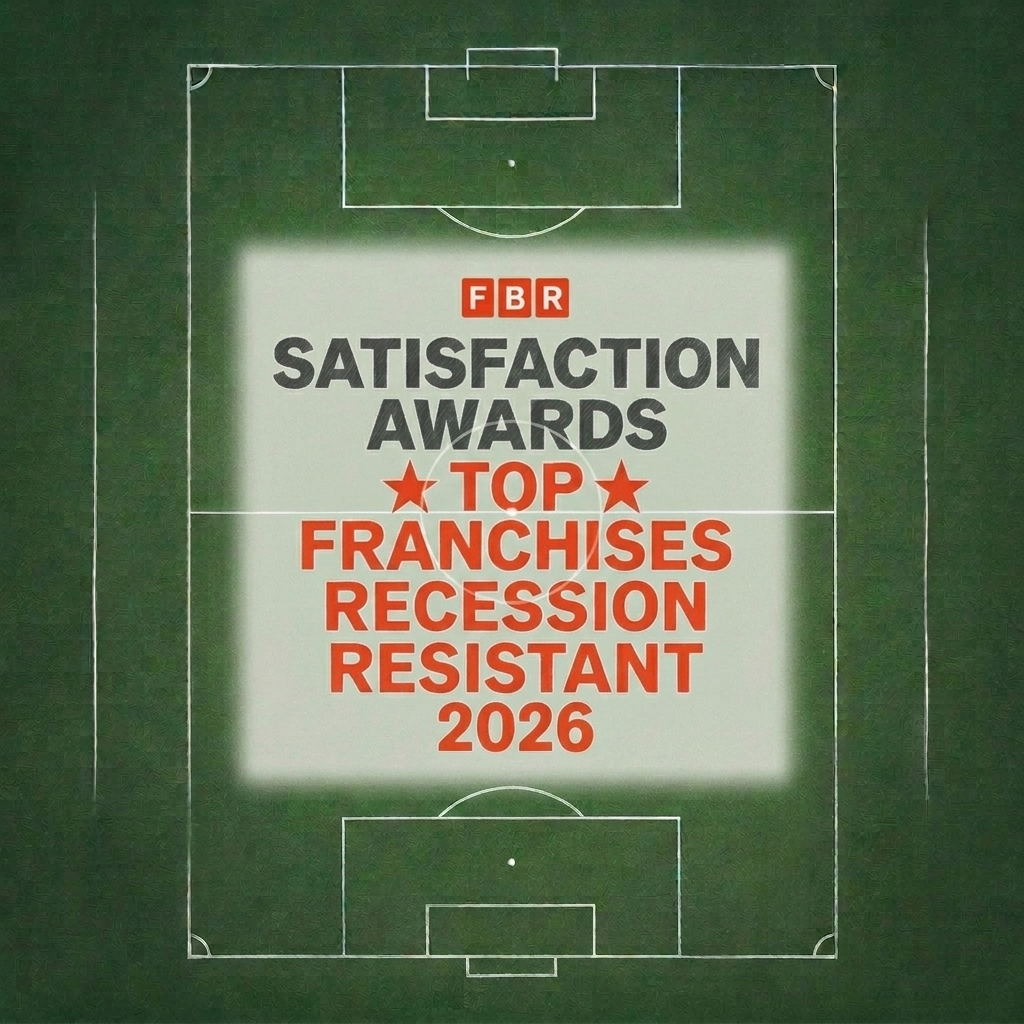
Franchise Business Review surveyed more than 29,000 franchise owners across nearly 330 brands before selecting 50 companies for its recession-resistant franchise list. The selected brands had average owner satisfaction ratings 10% to 40% higher than their competitors and met additional criteria associated with recession resistance.
Lil’ Kickers was included among the child enrichment and sports businesses on the Top Recession-Resistant Franchises list.
Owner satisfaction is an important signal because franchisees experience the model from the inside. They see how well the systems work, whether the support is useful, and how effectively the franchisor responds when operating conditions change.
The recognition is not a forecast of how any individual location will perform. It is independent evidence that the business has qualities worth examining more closely.
Franchise Business Review surveyed more than 29,000 franchise owners across nearly 330 brands before selecting 50 companies for its recession-resistant franchise list. The selected brands had average owner satisfaction ratings 10% to 40% higher than their competitors and met additional criteria associated with recession resistance.
Lil’ Kickers was included among the child enrichment and sports businesses on the Top Recession-Resistant Franchises list.
Owner satisfaction is an important signal because franchisees experience the model from the inside. They see how well the systems work, whether the support is useful, and how effectively the franchisor responds when operating conditions change.
The recognition is not a forecast of how any individual location will perform. It is independent evidence that the business has qualities worth examining more closely.
Youth Sports Are Growing, but Families Expect More
The latest participation data show continued interest in sports. The Sports & Fitness Industry Association’s 2026 report, based on 2025 data from Americans age six and older, found that team sports were the fastest-growing activity category and surpassed 90 million participants for the first time.
But participation alone does not tell the full story. The more revealing insight may be why children participate.
In the Aspen Institute’s 2026 national survey of nearly 4,000 young people, having fun and playing with friends ranked higher than earning a college scholarship. Children also valued a coach’s ability to teach sports and life skills over winning games. Among current players, 81% said sports improved their mental state, and 84% said they strengthened their social connections. However, affordability remains a concern; 41% of parents cited rising costs as the biggest barrier to participation in 2025.
The takeaway for youth sports businesses is clear: interest in sports is not enough. Families want programs that children enjoy, parents can see value in, and both consider worth returning to.
The Product Is More Than Soccer
Lil’ Kickers started back in 1999, using soccer to help kids grow and learn. Now, we’ve got over 130 locations where kids can play, 3 million kids have participated, and we’ve trained more than 50,000 coaches.
Our programs are designed to meet two important needs:
- Lil’ Kickers offers fun soccer classes for kids ages 18 months to 9 years old, focused on fundamentals and executive function skills needed for school.
- Skills Institute offers more targeted soccer skill-building for kids ages 5 to 12, focused on player development.
More often than not, parents are looking for a weekly fun activity that helps their child get active, listen better, feel more confident, connect with others, and have a blast learning.
It’s a big difference. Soccer is the vehicle, but the whole child-development experience is what families really value.
What Makes the Business Model Adaptable?
Lil’ Kickers’ recession-resistant qualities become clearer when viewed through three business fundamentals.
-
- Weekly programming creates opportunities for lasting relationships
A business built around occasional purchases must continually replace customers. Weekly classes year-round create the opportunity to build a different kind of relationship. Children become comfortable with their coaches. Parents see progress over time. Families may continue through different classes as a child grows and develops. The Lil’ Kickers experience is designed to earn the family’s return each week, giving owners an opportunity to build loyalty and a stronger local reputation.
- Weekly programming creates opportunities for lasting relationships
-
- Facility flexibility can help owners manage fixed costs
Demand is only one side of recession resistance. Cost structure matters, too. Lil’ Kickers franchise owners do not necessarily need to build or own a standalone soccer facility. Depending on the territory and approved operating plan, programs may operate in existing sports facilities, gyms, outdoor fields, and other shared spaces. For an entrepreneur, that could reduce the cost and complexity of developing a dedicated facility. For an existing facility operator, the program may create a way to use available field time and bring more families into the venue. The best arrangement will depend on local demand, availability, operating costs, and the franchise agreement. The advantage is having more than one facility model to consider.
- Facility flexibility can help owners manage fixed costs
-
- Established systems let owners focus on local execution
Lil’ Kickers franchisees get a tried-and-true curriculum, coach and leadership training, helpful operational advice, marketing tools, tech support, and ongoing business-building assistance. The model frees up owners to concentrate on the local aspects: finding great coaches, fostering community connections, ensuring a consistent experience, and growing enrollment in a responsible way. That’s the key to a successful franchise program. The franchisor sets the stage, and the owner brings it to life in the market.
- Established systems let owners focus on local execution
Five Questions to Ask About Any Recession-Resistant Franchise
An award can help a franchise stand out, but it should begin the research process rather than conclude it.
Prospective owners should ask:
-
- Why do customers return? Look beyond general demand. Identify what keeps customers choosing this particular brand.
- Which costs are fixed? Understand the complete facility, labor, technology, marketing, and operating requirements.
- What do current franchisees say? Speak with owners in different markets and at different stages of development.
- How has the system adapted before? Ask for specific examples of changes to operations, marketing, technology, or franchisee support.
- Can customers clearly recognize the value? When budgets tighten, businesses with vague benefits become easier to cut.
Youth Sports Are Growing, but Families Expect More
The latest participation data show continued interest in sports. The Sports & Fitness Industry Association’s 2026 report, based on 2025 data from Americans age six and older, found that team sports were the fastest-growing activity category and surpassed 90 million participants for the first time.
But participation alone does not tell the full story. The more revealing insight may be why children participate.
In the Aspen Institute’s 2026 national survey of nearly 4,000 young people, having fun and playing with friends ranked higher than earning a college scholarship. Children also valued a coach’s ability to teach sports and life skills over winning games. Among current players, 81% said sports improved their mental state, and 84% said they strengthened their social connections. However, affordability remains a concern; 41% of parents cited rising costs as the biggest barrier to participation in 2025.
The takeaway for youth sports businesses is clear: interest in sports is not enough. Families want programs that children enjoy, parents can see value in, and both consider worth returning to.
The Product Is More Than Soccer
Lil’ Kickers started back in 1999, using soccer to help kids grow and learn. Now, we’ve got over 130 locations where kids can play, 3 million kids have participated, and we’ve trained more than 50,000 coaches.
Our programs are designed to meet two important needs:
- Lil’ Kickers offers fun soccer classes for kids ages 18 months to 9 years old, focused on fundamentals and executive function skills needed for school.
- Skills Institute offers more targeted soccer skill-building for kids ages 5 to 12, focused on player development.
More often than not, parents are looking for a weekly fun activity that helps their child get active, listen better, feel more confident, connect with others, and have a blast learning.
It’s a big difference. Soccer is the vehicle, but the whole child-development experience is what families really value.
What Makes the Business Model Adaptable?
Lil’ Kickers’ recession-resistant qualities become clearer when viewed through three business fundamentals.
Weekly programming creates opportunities for lasting relationships
A business built around occasional purchases must continually replace customers. Weekly classes year-round create the opportunity to build a different kind of relationship. Children become comfortable with their coaches. Parents see progress over time. Families may continue through different classes as a child grows and develops. The Lil’ Kickers experience is designed to earn the family’s return each week, giving owners an opportunity to build loyalty and a stronger local reputation.
Facility flexibility can help owners manage fixed costs
Demand is only one side of recession resistance. Cost structure matters, too. Lil’ Kickers franchise owners do not necessarily need to build or own a standalone soccer facility. Depending on the territory and approved operating plan, programs may operate in existing sports facilities, gyms, outdoor fields, and other shared spaces. For an entrepreneur, that could reduce the cost and complexity of developing a dedicated facility. For an existing facility operator, the program may create a way to use available field time and bring more families into the venue. The best arrangement will depend on local demand, availability, operating costs, and the franchise agreement. The advantage is having more than one facility model to consider.
Established systems let owners focus on local execution
Lil’ Kickers franchisees get a tried-and-true curriculum, coach and leadership training, helpful operational advice, marketing tools, tech support, and ongoing business-building assistance. The model frees up owners to concentrate on the local aspects: finding great coaches, fostering community connections, ensuring a consistent experience, and growing enrollment in a responsible way. That’s the key to a successful franchise program. The franchisor sets the stage, and the owner brings it to life in the market.
Five Questions to Ask About Any Recession-Resistant Franchise
An award can help a franchise stand out, but it should begin the research process rather than conclude it.
Prospective owners should ask:
- Why do customers return? Look beyond general demand. Identify what keeps customers choosing this particular brand.
- Which costs are fixed? Understand the complete facility, labor, technology, marketing, and operating requirements.
- What do current franchisees say? Speak with owners in different markets and at different stages of development.
- How has the system adapted before? Ask for specific examples of changes to operations, marketing, technology, or franchisee support.
- Can customers clearly recognize the value? When budgets tighten, businesses with vague benefits become easier to cut.
TL;DR
TL;DR
Explore the Lil’ Kickers Franchise Opportunity
The Franchise Business Review is an honor, but what really makes Lil’ Kickers stand out is the team behind it, a service that families can easily get on board with, programming that encourages families to keep coming back, flexible facilities, and a solid support system for franchise owners.
If these key elements match what you’re hoping to find, I’d suggest checking out the available territories, what it takes to get started, and the support Lil’ Kickers franchise owners receive.
Feel free to ask for more information about the franchise and click here to set up a call and explore it further.
Explore the Lil’ Kickers Franchise Opportunity
The Franchise Business Review is an honor, but what really makes Lil’ Kickers stand out is the team behind it, a service that families can easily get on board with, programming that encourages families to keep coming back, flexible facilities, and a solid support system for franchise owners.
If these key elements match what you’re hoping to find, I’d suggest checking out the available territories, what it takes to get started, and the support Lil’ Kickers franchise owners receive.
Feel free to ask for more information about the franchise and click here to set up a call and explore it further.
 US Indoor Hall of Fame Honors Lil’ Kickers Leaders
Recent Articles

What Makes a Franchise Recession-Resistant?
What Makes a Franchise Recession-Resistant? Lil’ Kickers has been named [...]
US Indoor Hall of Fame Honors Lil’ Kickers Leaders
US Indoor Hall of Fame Honors Lil’ Kickers There [...]

New Lil’ Kickers Location in Atlanta
Lil’ Kickers Welcomes New Northeast Atlanta Franchise Location Lil' Kickers [...]
Franchise Business Review Names Lil’ Kickers Inc a Top Franchise
FOR IMMEDIATE RELEASE 3/19/2026 Lil’ Kickers Inc Named a 2026 [...]

Lil’ Kickers Murfreesboro in the News
Little Feet, Big Fun: Murfreesboro’s Lil’ Kickers Program Builds Confidence [...]

Welcome to the Team
Lil’ Kickers Welcomes New National Franchise Sales Manager AUGUST [...]

Lexington Sporting Club Partnership
FOR IMMEDIATE RELEASE Lexington Sporting Club July 30, 2025 Lexington [...]

Arena Sports & Seattle Sounders Partnership
Sounders FC and Arena Sports Partnership! JANUARY 2025Arena Sports, the [...]
What Makes a Franchise
Recession-Resistant?
Lil’ Kickers has been named one of Franchise Business Review’s Top Recession-Resistant Franchises for 2026.
We’re proud of the recognition, but the more useful story is what prospective franchise owners can learn from it. What helps a business remain relevant when families become more selective about where they spend?
It’s not usually just one thing that makes a business tough during a recession. What really helps is a mix of great customer service, keeping customers coming back, keeping costs down, doing a great job in your local area, and having systems in place to help owners adjust.
Lil’ Kickers has been named one of Franchise Business Review’s Top Recession-Resistant Franchises for 2026.
We’re proud of the recognition, but the more useful story is what prospective franchise owners can learn from it. What helps a business remain relevant when families become more selective about where they spend?
It’s not usually just one thing that makes a business tough during a recession. What really helps is a mix of great customer service, keeping customers coming back, keeping costs down, doing a great job in your local area, and having systems in place to help owners adjust.
What Does the Franchise Business Review Recognition Mean?
What Does the Franchise Business Review Recognition Mean?
Franchise Business Review surveyed more than 29,000 franchise owners across nearly 330 brands before selecting 50 companies for its recession-resistant franchise list. The selected brands had average owner satisfaction ratings 10% to 40% higher than their competitors and met additional criteria associated with recession resistance.
Lil’ Kickers was included among the child enrichment and sports businesses on the Top Recession-Resistant Franchises list.
Owner satisfaction is an important signal because franchisees experience the model from the inside. They see how well the systems work, whether the support is useful, and how effectively the franchisor responds when operating conditions change.
The recognition is not a forecast of how any individual location will perform. It is independent evidence that the business has qualities worth examining more closely.
Franchise Business Review surveyed more than 29,000 franchise owners across nearly 330 brands before selecting 50 companies for its recession-resistant franchise list. The selected brands had average owner satisfaction ratings 10% to 40% higher than their competitors and met additional criteria associated with recession resistance.
Lil’ Kickers was included among the child enrichment and sports businesses on the Top Recession-Resistant Franchises list.
Owner satisfaction is an important signal because franchisees experience the model from the inside. They see how well the systems work, whether the support is useful, and how effectively the franchisor responds when operating conditions change.
The recognition is not a forecast of how any individual location will perform. It is independent evidence that the business has qualities worth examining more closely.
Youth Sports Are Growing, but Families Expect More
The latest participation data show continued interest in sports. The Sports & Fitness Industry Association’s 2026 report, based on 2025 data from Americans age six and older, found that team sports were the fastest-growing activity category and surpassed 90 million participants for the first time.
But participation alone does not tell the full story. The more revealing insight may be why children participate.
In the Aspen Institute’s 2026 national survey of nearly 4,000 young people, having fun and playing with friends ranked higher than earning a college scholarship. Children also valued a coach’s ability to teach sports and life skills over winning games. Among current players, 81% said sports improved their mental state, and 84% said they strengthened their social connections. However, affordability remains a concern; 41% of parents cited rising costs as the biggest barrier to participation in 2025.
The takeaway for youth sports businesses is clear: interest in sports is not enough. Families want programs that children enjoy, parents can see value in, and both consider worth returning to.
The Product Is More Than Soccer
Lil’ Kickers started back in 1999, using soccer to help kids grow and learn. Now, we’ve got over 130 locations where kids can play, 3 million kids have participated, and we’ve trained more than 50,000 coaches.
Our programs are designed to meet two important needs:
- Lil’ Kickers offers fun soccer classes for kids ages 18 months to 9 years old, focused on fundamentals and executive function skills needed for school.
- Skills Institute offers more targeted soccer skill-building for kids ages 5 to 12, focused on player development.
More often than not, parents are looking for a weekly fun activity that helps their child get active, listen better, feel more confident, connect with others, and have a blast learning.
It’s a big difference. Soccer is the vehicle, but the whole child-development experience is what families really value.
What Makes the Business Model Adaptable?
Lil’ Kickers’ recession-resistant qualities become clearer when viewed through three business fundamentals.
-
- Weekly programming creates opportunities for lasting relationships
A business built around occasional purchases must continually replace customers. Weekly classes year-round create the opportunity to build a different kind of relationship. Children become comfortable with their coaches. Parents see progress over time. Families may continue through different classes as a child grows and develops. The Lil’ Kickers experience is designed to earn the family’s return each week, giving owners an opportunity to build loyalty and a stronger local reputation.
- Weekly programming creates opportunities for lasting relationships
-
- Facility flexibility can help owners manage fixed costs
Demand is only one side of recession resistance. Cost structure matters, too. Lil’ Kickers franchise owners do not necessarily need to build or own a standalone soccer facility. Depending on the territory and approved operating plan, programs may operate in existing sports facilities, gyms, outdoor fields, and other shared spaces. For an entrepreneur, that could reduce the cost and complexity of developing a dedicated facility. For an existing facility operator, the program may create a way to use available field time and bring more families into the venue. The best arrangement will depend on local demand, availability, operating costs, and the franchise agreement. The advantage is having more than one facility model to consider.
- Facility flexibility can help owners manage fixed costs
-
- Established systems let owners focus on local execution
Lil’ Kickers franchisees get a tried-and-true curriculum, coach and leadership training, helpful operational advice, marketing tools, tech support, and ongoing business-building assistance. The model frees up owners to concentrate on the local aspects: finding great coaches, fostering community connections, ensuring a consistent experience, and growing enrollment in a responsible way. That’s the key to a successful franchise program. The franchisor sets the stage, and the owner brings it to life in the market.
- Established systems let owners focus on local execution
Five Questions to Ask About Any Recession-Resistant Franchise
An award can help a franchise stand out, but it should begin the research process rather than conclude it.
Prospective owners should ask:
-
- Why do customers return? Look beyond general demand. Identify what keeps customers choosing this particular brand.
- Which costs are fixed? Understand the complete facility, labor, technology, marketing, and operating requirements.
- What do current franchisees say? Speak with owners in different markets and at different stages of development.
- How has the system adapted before? Ask for specific examples of changes to operations, marketing, technology, or franchisee support.
- Can customers clearly recognize the value? When budgets tighten, businesses with vague benefits become easier to cut.
Youth Sports Are Growing, but Families Expect More
The latest participation data show continued interest in sports. The Sports & Fitness Industry Association’s 2026 report, based on 2025 data from Americans age six and older, found that team sports were the fastest-growing activity category and surpassed 90 million participants for the first time.
But participation alone does not tell the full story. The more revealing insight may be why children participate.
In the Aspen Institute’s 2026 national survey of nearly 4,000 young people, having fun and playing with friends ranked higher than earning a college scholarship. Children also valued a coach’s ability to teach sports and life skills over winning games. Among current players, 81% said sports improved their mental state, and 84% said they strengthened their social connections. However, affordability remains a concern; 41% of parents cited rising costs as the biggest barrier to participation in 2025.
The takeaway for youth sports businesses is clear: interest in sports is not enough. Families want programs that children enjoy, parents can see value in, and both consider worth returning to.
The Product Is More Than Soccer
Lil’ Kickers started back in 1999, using soccer to help kids grow and learn. Now, we’ve got over 130 locations where kids can play, 3 million kids have participated, and we’ve trained more than 50,000 coaches.
Our programs are designed to meet two important needs:
- Lil’ Kickers offers fun soccer classes for kids ages 18 months to 9 years old, focused on fundamentals and executive function skills needed for school.
- Skills Institute offers more targeted soccer skill-building for kids ages 5 to 12, focused on player development.
More often than not, parents are looking for a weekly fun activity that helps their child get active, listen better, feel more confident, connect with others, and have a blast learning.
It’s a big difference. Soccer is the vehicle, but the whole child-development experience is what families really value.
What Makes the Business Model Adaptable?
Lil’ Kickers’ recession-resistant qualities become clearer when viewed through three business fundamentals.
Weekly programming creates opportunities for lasting relationships
A business built around occasional purchases must continually replace customers. Weekly classes year-round create the opportunity to build a different kind of relationship. Children become comfortable with their coaches. Parents see progress over time. Families may continue through different classes as a child grows and develops. The Lil’ Kickers experience is designed to earn the family’s return each week, giving owners an opportunity to build loyalty and a stronger local reputation.
Facility flexibility can help owners manage fixed costs
Demand is only one side of recession resistance. Cost structure matters, too. Lil’ Kickers franchise owners do not necessarily need to build or own a standalone soccer facility. Depending on the territory and approved operating plan, programs may operate in existing sports facilities, gyms, outdoor fields, and other shared spaces. For an entrepreneur, that could reduce the cost and complexity of developing a dedicated facility. For an existing facility operator, the program may create a way to use available field time and bring more families into the venue. The best arrangement will depend on local demand, availability, operating costs, and the franchise agreement. The advantage is having more than one facility model to consider.
Established systems let owners focus on local execution
Lil’ Kickers franchisees get a tried-and-true curriculum, coach and leadership training, helpful operational advice, marketing tools, tech support, and ongoing business-building assistance. The model frees up owners to concentrate on the local aspects: finding great coaches, fostering community connections, ensuring a consistent experience, and growing enrollment in a responsible way. That’s the key to a successful franchise program. The franchisor sets the stage, and the owner brings it to life in the market.
Five Questions to Ask About Any Recession-Resistant Franchise
An award can help a franchise stand out, but it should begin the research process rather than conclude it.
Prospective owners should ask:
- Why do customers return? Look beyond general demand. Identify what keeps customers choosing this particular brand.
- Which costs are fixed? Understand the complete facility, labor, technology, marketing, and operating requirements.
- What do current franchisees say? Speak with owners in different markets and at different stages of development.
- How has the system adapted before? Ask for specific examples of changes to operations, marketing, technology, or franchisee support.
- Can customers clearly recognize the value? When budgets tighten, businesses with vague benefits become easier to cut.
TL;DR
TL;DR
Explore the Lil’ Kickers Franchise Opportunity
The Franchise Business Review is an honor, but what really makes Lil’ Kickers stand out is the team behind it, a service that families can easily get on board with, programming that encourages families to keep coming back, flexible facilities, and a solid support system for franchise owners.
If these key elements match what you’re hoping to find, I’d suggest checking out the available territories, what it takes to get started, and the support Lil’ Kickers franchise owners receive.
Feel free to ask for more information about the franchise and click here to set up a call and explore it further.
Explore the Lil’ Kickers Franchise Opportunity
The Franchise Business Review is an honor, but what really makes Lil’ Kickers stand out is the team behind it, a service that families can easily get on board with, programming that encourages families to keep coming back, flexible facilities, and a solid support system for franchise owners.
If these key elements match what you’re hoping to find, I’d suggest checking out the available territories, what it takes to get started, and the support Lil’ Kickers franchise owners receive.
Feel free to ask for more information about the franchise and click here to set up a call and explore it further.
US Indoor Hall of Fame Honors Lil’ Kickers LeadersRecent Articles
What Makes a Franchise Recession-Resistant?
What Makes a Franchise Recession-Resistant? Lil’ Kickers has been named [...]
US Indoor Hall of Fame Honors Lil’ Kickers Leaders
US Indoor Hall of Fame Honors Lil’ Kickers There [...]
New Lil’ Kickers Location in Atlanta
Lil’ Kickers Welcomes New Northeast Atlanta Franchise Location Lil' Kickers [...]
Franchise Business Review Names Lil’ Kickers Inc a Top Franchise
FOR IMMEDIATE RELEASE 3/19/2026 Lil’ Kickers Inc Named a 2026 [...]
Lil’ Kickers Murfreesboro in the News
Little Feet, Big Fun: Murfreesboro’s Lil’ Kickers Program Builds Confidence [...]
Welcome to the Team
Lil’ Kickers Welcomes New National Franchise Sales Manager AUGUST [...]
Lexington Sporting Club Partnership
FOR IMMEDIATE RELEASE Lexington Sporting Club July 30, 2025 Lexington [...]
Arena Sports & Seattle Sounders Partnership
Sounders FC and Arena Sports Partnership! JANUARY 2025Arena Sports, the [...]